



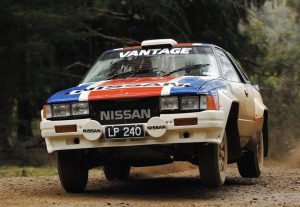
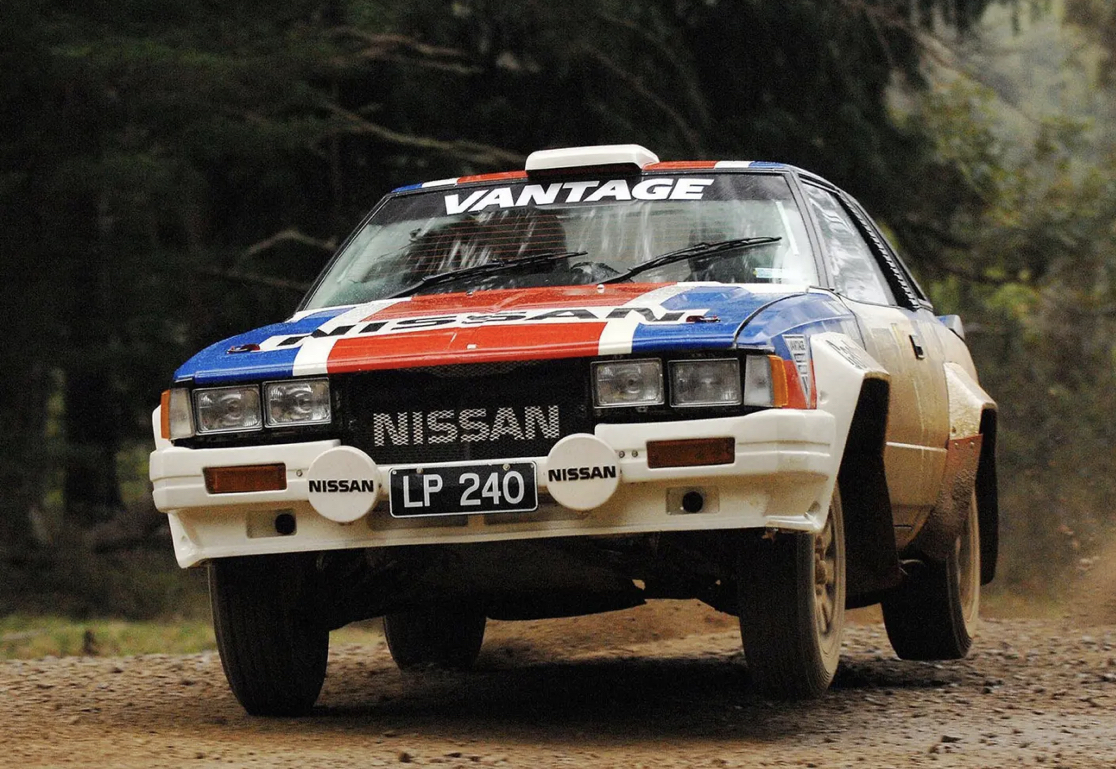
Horley competed in various circuit categories with little success in his early days; mentored to give Rallying a try he acquired a Datsun160J and soon gained notoriety, in 1980 he acquired a new Nissan SSS featuring a 2 litre turbocharged engine and with some sponsorship, took the team to New Zealand for the World Rally Championship. After some good results in the NZ national rallies, he was offered a drive with a Nissan factory-backed team seeking for a replacement driver for the World Championship event’s Motorguard Rally of New Zealand’.
Following his first WRC event, Nissan offered him a sponsored drive competing in the Asian Rally Championship in a Nissan Silvia with Chang Racing. The Malaysian based team competed throughout Asia in FIA international events where Horley achieved some impressive results in the 5-day endurance events.
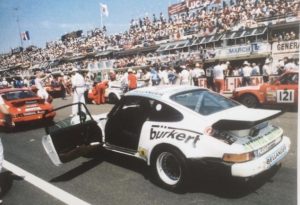
The Porsche 930’s were notoriously difficult to drive and with over 370HP and excessive ‘bump’ steering. Again Horley had his best results in the endurance events with points in Fuji & Shah Alam. Whilst racing in Macau Horley was involved in an accident when the circuit was blocked with four cars catching fire causing significant damage and Red Flagging the race
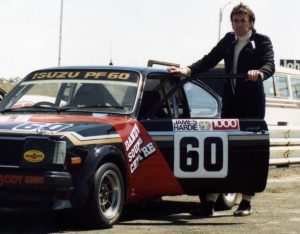
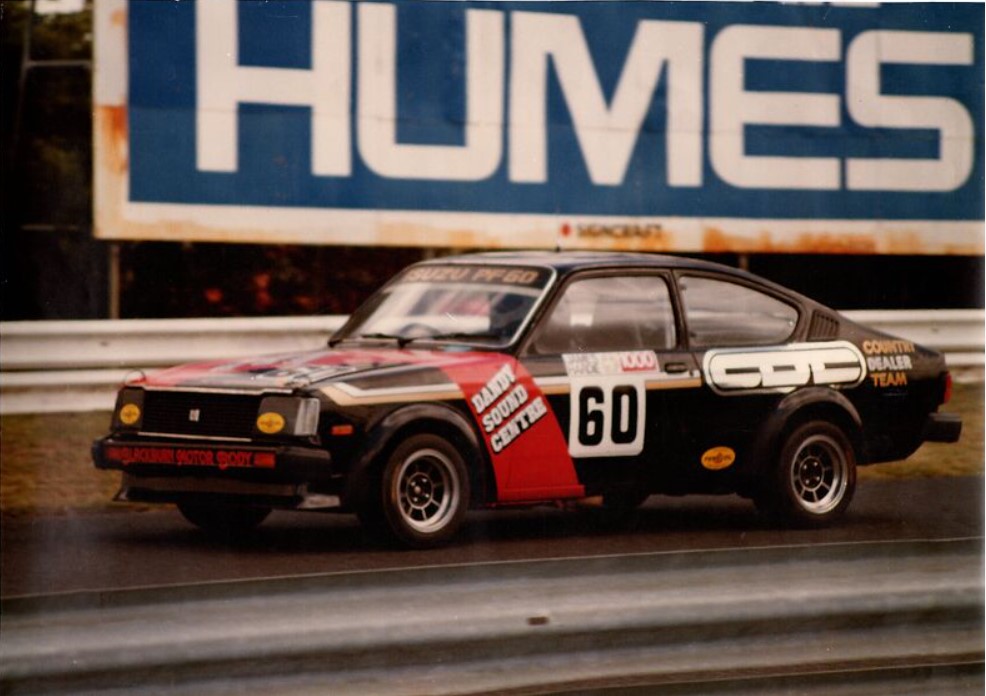
Horley returned to Australia for the Australian Endurance Championship rounds throughout the ’80s and drove for the Country Dealer Team in the 2-liter category in the Isuzu PF60.
With the introduction of ‘Group A’ Touring Cars as the new international FIA category in 1986, Horley acquired a two-car Ford 3000S Capri’s and competed in the Australian Touring Car Championship and Australian Endurance Championship.
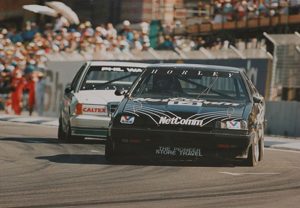
In 1987, The team contracted a Nissan Skyline Turbo DR30RS for an assault on the outright category and competed in both the Australian Touring Car Championship (ATCC) & World Touring Car Championship (WTC) events.
In 1988, whilst competing in the Southeast Asian championship, Horley was involved in a highspeed accident and suffered serious injuries including a broken neck which forced his retirement from competition.
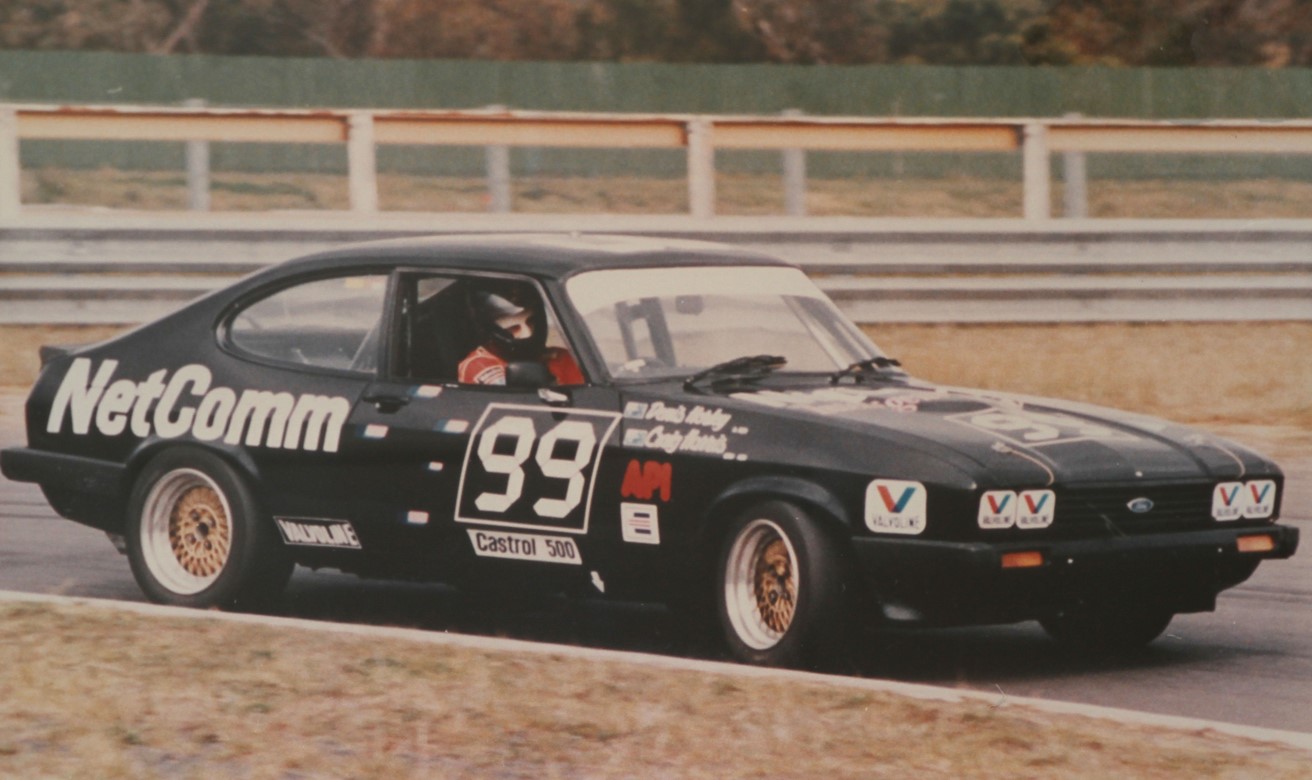
James Horley also developed the world’s first live data telemetry system for motorsport [3]. His engineering expertise and knowledge of international motorsport allowed him to develop ‘The Racing Modem System’ developed in conjunction with his sponsor, Netcomm Australia.
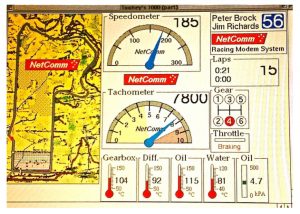
For the first time, data from the on-board CPU’s were transmitted to the team engineers in the pits, allowing them to analysis the race cars’ performance in real-time. This technology was a world-first for motorsport and was released in Australia at the 1987 Sandown Castrol 500 where he finished 5th outright.
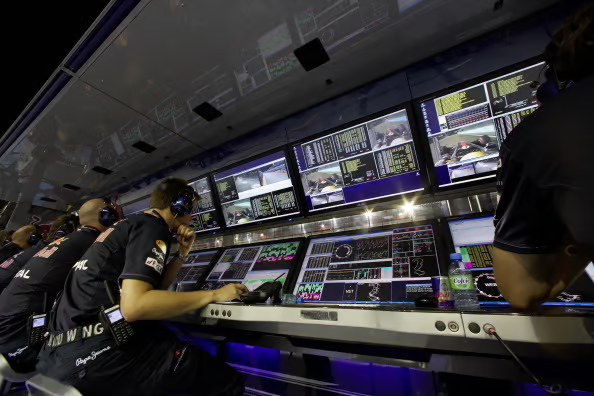
Today Data Telemetry Systems are utilized in all international motorsport categories, including all Formula One teams. Data collected from the car’s engine, drivetrain and chassis management systems are sent to the engineers via live-stream radio signals allowing instance analysis of performance and fuel management systems, braking and engine performance. Data analysis and measurements of the race car provide vital engineering information including accelerations (G forces) in 3 axes, temperature readings, wheel speed, and the displacement of the suspension.
Horley went on to develop a version of the data transmission specifically for television, where the car’s instrument panel could be shown during live TV broadcasts. This initiative was first used by Australia’s 7 Network during the World Touring Car Championship in the Bathurst 1000 in 1987 and is now utilized by many broadcasters on various motorsport coverage throughout the world. [4]



James Horley
| Nationality | Australian |
| Born | June 1960 |
| Motorsport Career | |
| 146 | Race Starts |
| Championships & Events | |
| 1979-81 1981 – 82 1982 | Victorian Rally Championship Australian Rally Championship New Zealand Championship |
| 1982 -83 1982 -85 1984-88 1985-88 1983-86 1986-87 1983-85 1984-87 | World Rally Championship Asian Rally Championship Australian Touring Car Championship Australian Endurance Championship Asian Sports Car Championship Asian Touring Car Championship Macau Grand Prix Bathurst 1000 |
| Awards | |
| 2004 | FIM ‘Jack Findlay’ Award |
 |
|
 |
|
 |
|
|
|
 |
|
 |
|